Waterjet cutting is a new cutting process in manufacturing that has altered the manner of cutting materials in most manufacturing companies. Waterjet cutting is a modern technique that involves cutting through materials with a high degree of accuracy, unlike the traditional technique, which involvesthe use of heat or blades.
In other instances, sharp particles are introduced in the water to slice more difficult materials such as metal or stone. It is a technique that is characterized by precision, versatility, and the capacity to deal with fragile or intricate designs without breaking the material. In this article, we will describe the working of waterjet cutting, the type of materials that can be cut using this machine, and the major advantages that make it one of the most preferred tools to use in modern fabrication.
What Is Waterjet Cutting
A fabrication process is waterjet cutting, which involves cutting materials with a jet of high-pressure water. In the case of the softer material, such as rubber or foam, pure water usually suffices. In the case of harder materials like steel, glass, or granite, abrasive materials such as garnet are combined with the water stream.
Waterjet cutting is a cold cutting process since it does not involve heat. This does not allow warping of material, melting, or structural alteration.
Types of Waterjets
Pure Waterjet: Uses only water to cut soft materials like food, foam, carpet, and rubber.
Abrasive Waterjet: Mixes water with abrasive to cut hard materials like metal, stone, tile, and composites.
How Waterjet Cutting Works
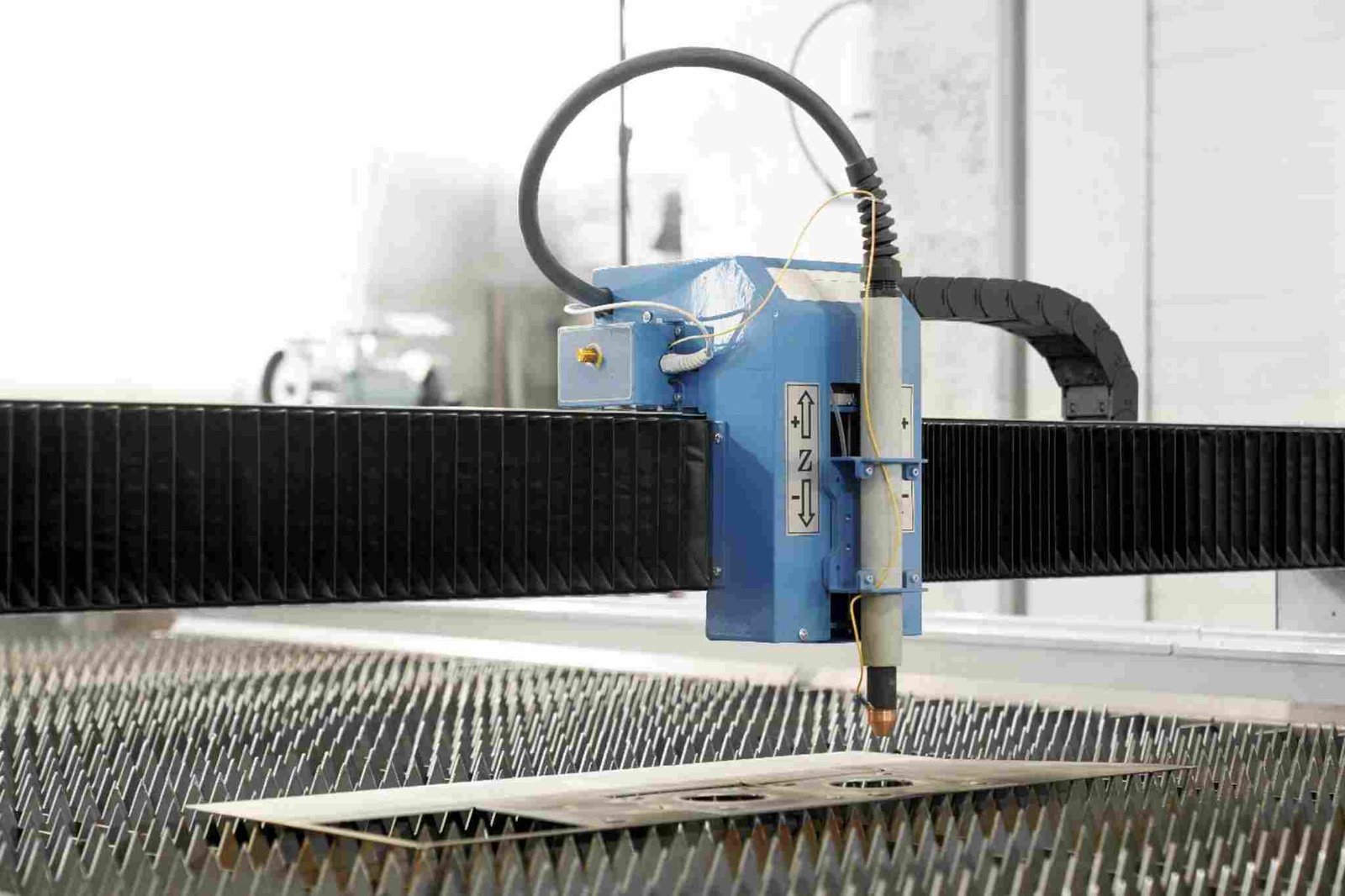
The waterjet cutting process starts with the pressurization of water with the help of a high-powered pump. The water is then shot through a small nozzle, producing a focused and powerful stream.
In cases where cutting is required to be abrasive, the abrasive particles are incorporated into the stream at the cutting head. The jet is then directed to cut the material along an accurately programmed path.
Materials That Use Waterjet Cutting
Waterjet cutting is versatile, and it is one of its most significant strengths. It is capable of cutting a large variety of materials, such as:
- Steel, aluminum, copper, and titanium.
- Stone, marble, and granite
- Glass and ceramics
- Rubber, foam, and plastics
- Composite materials
This flexibility causes waterjet cutting to be applicable to most industries and special projects.
Benefits of Waterjet Cutting
There are several key advantages of waterjet cutting:
- No heat damage: Materials retain their original properties
- Very precise: Perfect in complicated designs.
- Clean cuts: Little finishing/polishing required.
- Ecologically friendly: Water and natural abrasives are used.
- Less wastage: Accurate cutting translates to less wastage.
- Versatility: Cuts virtually any material, from soft (rubber, foam) to extremely hard (steel, granite, titanium).
- Environmentally Friendly: Produces no hazardous fumes or toxic by-products, and abrasives can often be recycled.
Applications of Waterjet Cutting
Many industries apply waterjet cutting; these include aerospace, automotive, construction, manufacturing, and art and design. It is usually used to make machine components and custom parts, architecture, signage, and ornamentation.
Waterjet cutting is suitable for both industrial manufacturing and one-off fabrication projects because it is effective in cutting both heavy and delicate materials.