Understanding Frown Lines
Frown lines are the stubborn vertical creases that form between the eyebrows, often called “11 lines” due to their characteristic parallel appearance. These lines develop over years of repeated facial expressions — frowning, squinting, and concentrating — gradually etching themselves deeper into the skin. Frown line reduction has become one of the most sought-after aesthetic goals in modern dermatology, as these lines can make a person appear tired, angry, or older than their actual age. Unlike fine surface lines, glabellar lines (the medical term for frown lines) result from both muscle movement and collagen breakdown, which is why targeted clinical intervention is often necessary for visible results.
The skin between the eyebrows is particularly susceptible to dynamic wrinkling because the corrugator supercilii and procerus muscles contract constantly throughout the day. Over time, repeated muscle contractions break down the skin’s structural proteins, causing permanent creases even when the face is at rest. Understanding this muscle-driven mechanism is key to choosing the most effective clinical treatment.
Botulinum Toxin Injections (Botox)
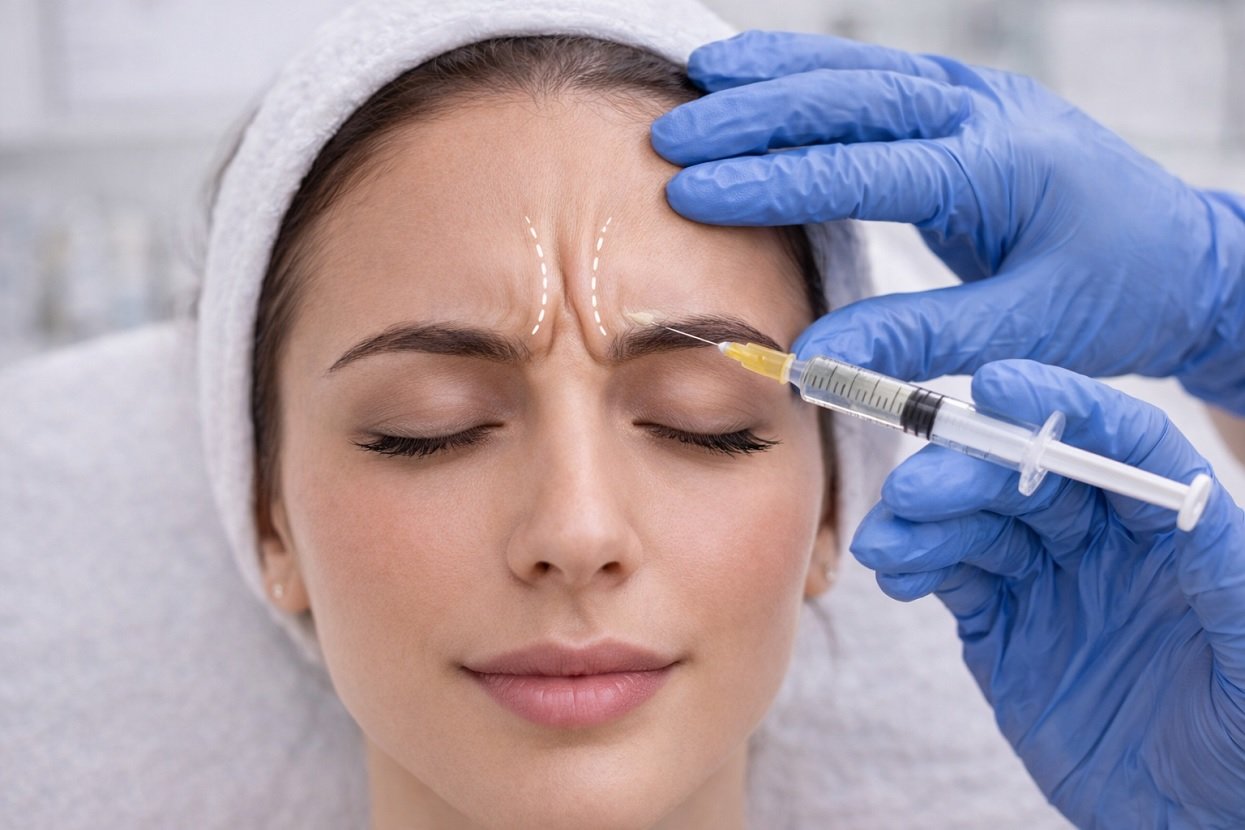
The gold standard for frown line reduction remains botulinum toxin type A, widely known by brand names such as Botox, Dysport, and Xeomin. This neuromodulator works by temporarily blocking the nerve signals responsible for muscle contractions in the glabellar region. When the corrugator and procerus muscles are relaxed, they can no longer deepen existing creases or create new ones.
A trained dermatologist or plastic surgeon injects small, precise doses into targeted muscle points between the brows. The procedure takes approximately 10 to 15 minutes, requires no anesthesia, and involves minimal discomfort. Results typically become visible within 3 to 7 days and last between 3 to 6 months, depending on the patient’s muscle activity, metabolism, and dosage administered.
Botulinum toxin injections are FDA-approved specifically for glabellar lines, making them one of the safest and most clinically validated options available. Regular maintenance sessions help “train” the muscles to contract less aggressively over time, which can extend the intervals between treatments.
Dermal Fillers for Deep Frown Lines
While botulinum toxin addresses the muscular cause of frown lines, dermal fillers target the structural volume loss that contributes to deep, static creases. Hyaluronic acid-based fillers such as Juvederm and Restylane are commonly used to physically fill and smooth deep glabellar lines that remain visible even without muscle movement.
The filler is carefully injected beneath the wrinkle to lift and plump the skin from within, creating an immediate smoothing effect. Results are visible instantly and can last anywhere from 6 to 18 months depending on the filler density and individual metabolism. Many clinicians combine dermal fillers with botulinum toxin in a “liquid lift” approach for comprehensive frown line reduction — addressing both the cause and the visible crease simultaneously.
It is essential that filler injections in the glabellar region be performed exclusively by experienced medical professionals, as this area carries vascular risks. Proper technique and anatomical knowledge significantly reduce the likelihood of complications.
Laser Skin Resurfacing
Laser treatments offer a powerful clinical solution for frown lines by stimulating collagen remodeling at a deeper tissue level. Fractional CO2 lasers and erbium lasers create controlled micro-injuries in the skin that trigger the body’s natural healing response, producing new collagen and elastin fibers.
Ablative lasers remove the outer damaged skin layers entirely, delivering dramatic results with a recovery period of 7 to 14 days. Non-ablative fractional lasers, such as Fraxel, penetrate deep without removing the surface layer, offering a gentler option with a shorter downtime of 3 to 5 days. Multiple sessions are often recommended for optimal frown line reduction, particularly for moderate to severe cases.
Laser resurfacing is especially effective when the lines have a textural component — rough, etched creases that don’t respond fully to injectables alone. The treatment also improves overall skin tone, pigmentation, and firmness in the treated area.
Radiofrequency and Ultrasound Treatments
Energy-based devices like radiofrequency (RF) microneedling and high-intensity focused ultrasound (HIFU) deliver heat energy to deeper skin layers, triggering collagen production and tissue tightening without damaging the surface.
- RF Microneedling (e.g., Morpheus8) combines tiny needles with radiofrequency energy to remodel collagen precisely where frown lines are deepest
- HIFU (e.g., Ultherapy) uses ultrasound waves to target the SMAS layer beneath the skin, producing a lifting and tightening effect that gradually reduces wrinkle depth over 2 to 3 months
- Both treatments require minimal downtime, making them popular among patients who cannot afford recovery time
- Results continue improving for up to 6 months as new collagen matures
These technologies are particularly suitable for patients seeking gradual, natural-looking improvement or as maintenance treatments between injectable appointments.
Chemical Peels and Prescription Retinoids
Medium-depth chemical peels using trichloroacetic acid (TCA) accelerate cellular turnover, removing damaged skin layers and promoting collagen synthesis. TCA peels at concentrations of 15–35% are effective for softening mild to moderate frown lines and improving overall skin texture, with results lasting several months post-treatment.
Prescription-strength topical tretinoin, while slower-acting than in-office procedures, is clinically proven to increase collagen production, thicken the epidermis, and gradually reduce fine lines with consistent use. Dermatologists often prescribe tretinoin as a foundational maintenance therapy alongside more intensive treatments for comprehensive long-term frown line reduction.
Choosing the Right Treatment Plan
The most effective approach to treating frown lines is rarely a single-modality solution. A skilled dermatologist or aesthetic physician will assess the severity of your glabellar lines, skin quality, muscle strength, and cosmetic goals before recommending a personalized treatment protocol. Combining neuromodulators, fillers, energy-based devices, and maintenance therapies provides the most comprehensive and lasting results available in modern aesthetic medicine.
Lydia Harper is a professional health and aesthetic medicine writer specializing in frown line reduction, facial rejuvenation, and non-invasive cosmetic treatments. She focuses on translating aesthetic procedure insights and skincare science into clear, reader-friendly content that helps individuals understand treatment options, safety considerations, and effective approaches to maintaining smoother, healthier-looking skin.