
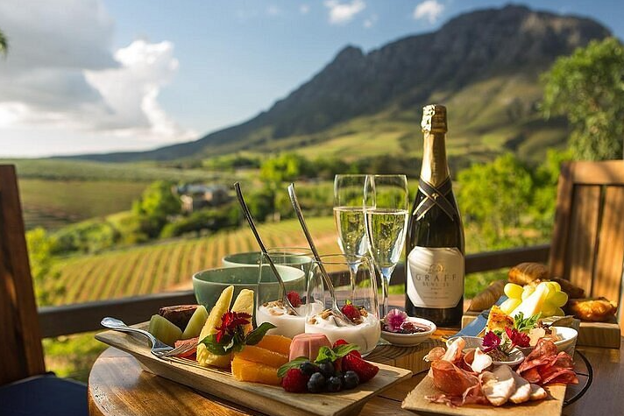
Wine Estates in Cape Town : Most folks came anticipating wine. What truly gets them is everything around it. The cool fog hovered over the vines till late morning. The quiet of a basement that smells of aged wood and wet stone. The moment a winemaker says something offhand about the land, the glass in your hand suddenly makes more sense. Wine estates in Cape Town have a reputation for catching people off guard, and that quality is actually rare to obtain elsewhere.
The Terroir Nobody Talks About
The Cape sits where two oceans meet, and that is not just a postcard fact. It has real consequences for what ends up in the bottle. Afternoons here can be fierce, but nights drop sharply, and that gap forces the grapes to hold on to natural acidity that warmer climates simply cook away. A Cape Sauvignon Blanc carries a minerality that tends to surprise people expecting something soft and tropical. What is less obvious is how dramatically the landscape shifts from one valley to the next. Mountain ranges create microclimates that are almost absurdly localized two estates sharing a postcode can produce wines that taste like they come from different countries entirely.
Pinotage Deserves a Fairer Hearing
South Africa’s own grape variety has a complicated reputation, and a lot of it is deserved just not by the right bottles. The cheap, mass-market versions gave people a first impression that stuck. Wine Estates in Cape Town : Pinotage handled with genuine care and lower yields is an entirely different thing. There is a smokiness to it, a deep earthiness, something that does not map neatly onto any European reference point. That quality is rare. Producers who take old-vine material serious ly have been quietly making the case for it for years, mostly to those willing to look past the grape’s troubled name.
Constantia’s History Runs Unusually Deep
Long before wine tourism became an industry, the Constantia Valley was already producing wines that landed on the tables of European royalty. Groot Constantia is among the oldest continuously producing estates in the Southern Hemisphere, and the age shows not in decline, but in depth. The Muscat vines used for Vin de Constance are descended from the estate’s original plantings. Drinking it connects you to something documented and traceable. Wine Estates in Cape Town : That kind of lineage is not marketing language. It is simply true, and it matters more than most visitors initially expect.
Estate Restaurants Changed the Conversation
The food across the Winelands stopped being an afterthought somewhere along the way. Kitchens at estates like Babel at Babylonstoren and The Restaurant at Waterkloof are not bolted-on additions built to keep visitors occupied between tastings. They are serious operations where the sourcing, the farming philosophy, and the wine programme all pull in the same direction. Waterkloof’s biodynamic approach means the vegetable on the plate grew under the same principles as the grape in the glass. Wine Estates in Cape Town : That kind of coherence is harder to manufacture than it sounds, and most restaurants never quite achieve it.
Visiting Well Requires Some Thought
Wine Estates in Cape Town : Turning up without a plan on a busy weekend is a guaranteed way to spend most of the day waiting. The prominent wine estates especially those with established reputations along the Franschhoek route fill up fast, and the tasting room experience suffers for it. Booking ahead, picking a calmer weekday, or purposefully searching out smaller suppliers tends to yield something lot more value. The Swartland area, within close reach of the city, features a concentration of low-intervention winemakers creating wines that quietly surpass their characteristics. They are not hard to locate, just less publicly pushed.
Conclusion
Wine estates in Cape Town reward individuals who attend with genuine interest rather than a checklist. The area contains great depth geological, historical, gastronomic and the top estates convey all of it into what they pour. Book a table besides the tasting. Try a Pinotage from someone who genuinely cares about it. Ask the person pouring your wine where they obtain their grapes and see how they respond. The Winelands have earned its reputation over a long stretch of time, and it stands up far better when tackled on the region’s own terms.