
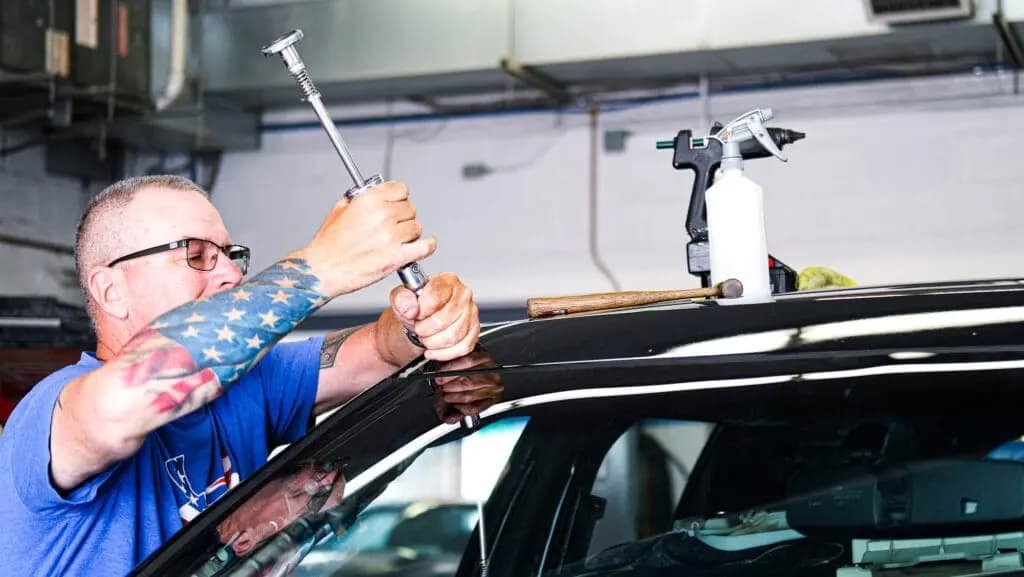
Paintless Dent Repair: Vehicle body damage from hail, minor collisions, door dings, and other low-impact events is a frustration that most vehicle owners encounter at some point. Historically, addressing these issues required traditional bodywork involving filler, sanding, and repainting, which is expensive, time-consuming, and affects the vehicle’s original factory finish. A technique that has become increasingly refined over recent decades offers an alternative that avoids these drawbacks in many situations.
How the Process Works
The paintless dent removal uses specialized metal tools and, in some applications, glue-pull systems to work the damaged metal back to its original profile without disturbing the paint surface. Technicians access the back of the panel through existing openings or by partially disassembling adjacent trim components, then apply carefully controlled pressure to gradually massage the metal back into shape.
The process requires considerable skill and patience. Working metal without creating secondary damage or paint cracking demands an understanding of how different metals respond to pressure, how to read the reflection of light on a panel to assess progress, and how to avoid creating high spots or ripples that are worse than the original damage.
Situations Where It Works Well
This technique is most effective on dents where the paint surface is intact, the metal has not been creased or folded sharply, and the damage is not near a panel edge or body line where metal is too stiff to manipulate without risk. Round, shallow dents from hail or parking lot door contacts are ideal candidates. The technique is widely used for hail damage restoration specifically because hail typically creates numerous shallow, round dents across large panel areas where traditional repair would be prohibitively expensive.
Limitations to Understand
Not every dent is a suitable candidate. Sharp creases, damage where the paint has cracked or flaked, dents on aluminium panels that require different handling than steel, and damage very close to panel edges may not respond well to this approach. A professional assessment before committing to any repair method confirms whether the paintless technique is appropriate for your specific damage.
Preserving Vehicle Value (Paintless Dent Repair)
One of the most significant advantages of this approach is that it preserves the original factory paint, which is widely considered superior in both finish quality and protection to any repainted surface. Vehicles with all original paint typically command better resale values and pass pre-purchase inspections more favourably than those with evidence of respray work. For late-model vehicles where preservation of original finish quality matters, this technique is often the clearly superior option when the damage profile makes it viable.
Cost, Insurance, and Repair Decision Factors
Paintless dent repair is often significantly more cost-effective than traditional bodywork because it eliminates the need for sanding, filler, primer, and repainting, as well as the labour associated with colour matching and curing time. For small to medium dents, the price difference can be substantial, making it an attractive option for both minor cosmetic repairs and large-scale hail damage restoration.
Insurance companies frequently approve paintless dent repair because it reduces claim costs while restoring the vehicle to its pre-damage condition. In many cases, policyholders can choose approved repairers who specialize in this method, which streamlines the claims process and shortens downtime.